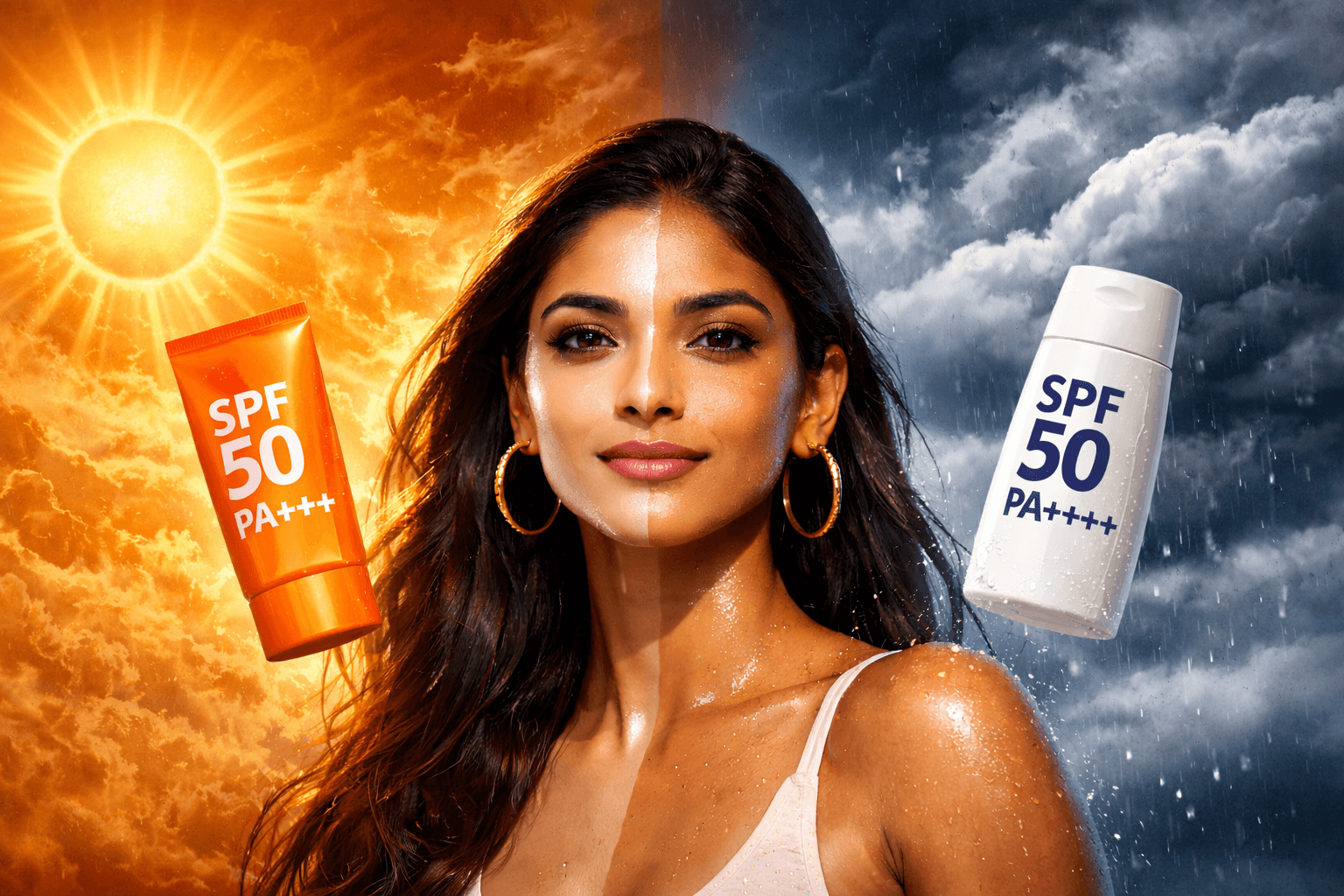
Sunscreen is the single most impactful skincare product you can use — but in India's intense UV climate, choosing the wrong one means you're getting little to no real protection. This guide breaks down exactly what to look for, what to avoid, and which formula works best for your skin type in Indian weather.
In This Article
- Why Indian Weather Demands More From Your Sunscreen
- SPF 30 vs SPF 50 — Which Should You Choose?
- Understanding PA Ratings
- Best Sunscreen Types for Indian Skin
- How to Apply Sunscreen Correctly
- Common Mistakes to Avoid
Why Indian Weather Demands More From Your Sunscreen
India sits close to the equator, which means:
- UV Index of 8–11 in most cities (very high to extreme)
- 60–90% humidity making heavy formulas unbearable
- Constant sweating that washes sunscreen away faster
- High pollution that accelerates UV-related skin damage
This is why many global sunscreens that feel fine in Europe feel greasy and suffocating in Mumbai or Chennai.
SPF 30 vs SPF 50 — Which Should You Choose?
SPF 30 blocks about 97% of UVB rays. SPF 50 blocks about 98%. The difference sounds small, but in India's extreme UV exposure, that 1% matters — especially over a lifetime of daily wear.
Our recommendation: Always choose SPF 50 PA++++ for Indian weather. SPF 30 is acceptable only for indoor workers who rarely step out.
Understanding PA Ratings
PA ratings measure UVA protection (the rays responsible for ageing and pigmentation):
- PA++ — Moderate (not enough for India)
- PA+++ — Good
- PA++++ — Maximum (what you need for Indian conditions)
Always combine SPF 50 with PA++++ for complete protection.
Best Sunscreen Types for Indian Skin
Gel-Based Sunscreens — Best for Oily & Combination Skin
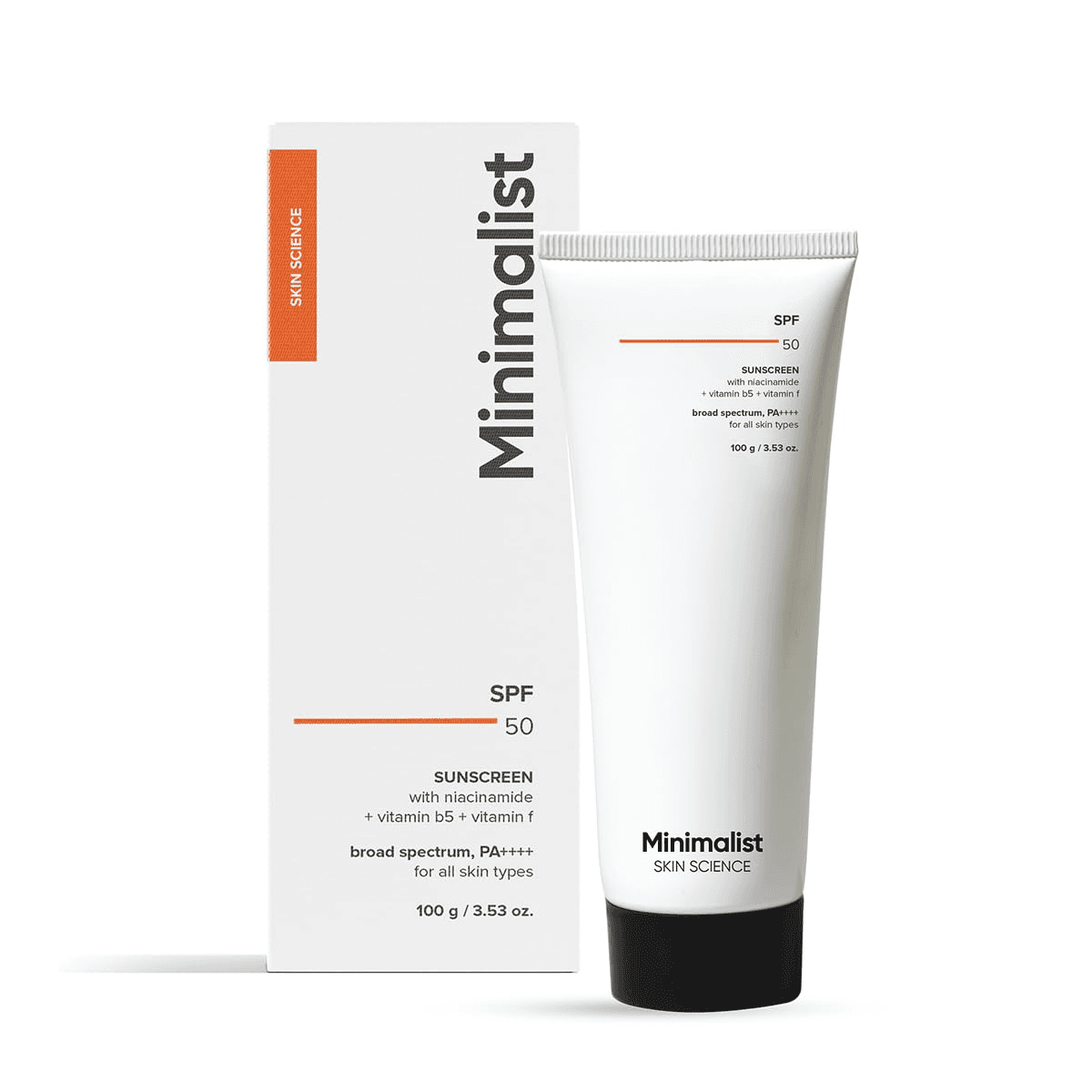
Gel sunscreens absorb quickly, feel invisible, and leave no white cast. They're ideal for India's humid climate because they don't trap sweat under a heavy layer.
Best for: Daily use, oily and combination skin, under makeup
Chemical vs Mineral — Which Is Better for India?
Chemical sunscreens (containing avobenzone, tinosorb) feel lightweight and invisible on skin. Mineral sunscreens (zinc oxide, titanium dioxide) sit on top of the skin and can leave a white cast on Indian skin tones. For most Indian skin tones, hybrid or purely chemical SPF 50 formulas work best.
Key Ingredients That Improve Sunscreen Performance
- Niacinamide — Controls shine and reduces pigmentation
- Glycerin — Keeps skin comfortable and hydrated
- Vitamin C — Antioxidant protection alongside UV defence
- Hyaluronic Acid — Prevents sunscreen from feeling drying
How to Apply Sunscreen Correctly
Most people use far too little. Here's the right method:
- Apply 2 finger lengths of product for the face and neck
- Apply 30 minutes before stepping out
- Reapply every 2–3 hours if outdoors
- Reapply after sweating or swimming
- Don't forget the back of the neck, ears, and hands
Common Sunscreen Mistakes to Avoid
- Using too little — a thin smear doesn't give rated SPF
- Skipping on cloudy days — UV rays penetrate cloud cover
- Not reapplying — sunscreen breaks down after 2–3 hours of sun exposure
- Relying on SPF in foundation — cosmetic SPF is not enough
- Only using in summer — UV index is high in India year-round
Takeaway
The best sunscreen for Indian weather is one you'll actually wear every day — lightweight, non-greasy, SPF 50 PA++++, and comfortable enough for India's climate. Pick a formula that suits your skin type, apply it generously, and reapply when needed. That single habit alone will do more for your skin than any serum or treatment.